
Platform
Real insights depend on real people
At the core of Brainactive is research with real human respondents.



Respondents and Sampling Overview
This page explains who those respondents are, how they are sourced, how sampling works, and what you can expect in terms of coverage and representativeness when running studies through the platform.
Transparency and Realism
Our goal is to be clear and transparent - without overstating precision or making unrealistic claims.
Get started now
Where respondents come from
Brainactive supports multiple ways to reach respondents, depending on your research needs:


Your own audience
Use customer lists, user bases, or proprietary samples you already control.

Vetted external panel respondents
Access respondents through trusted panel marketplaces such as Cint, which aggregates and manages a global network of panel providers.

Externally distributed surveys
Host surveys in Brainactive while distributing links via your own channels, partners, or communities.
Regardless of the source, Brainactive applies platform-level controls to ensure data quality and consistency during fieldwork, regardless of respondent source.
Geographic coverage
Brainactive supports research across a wide range of markets globally, including:

North America
Europe
Asia-Pacific
Latin America
Middle East and Africa
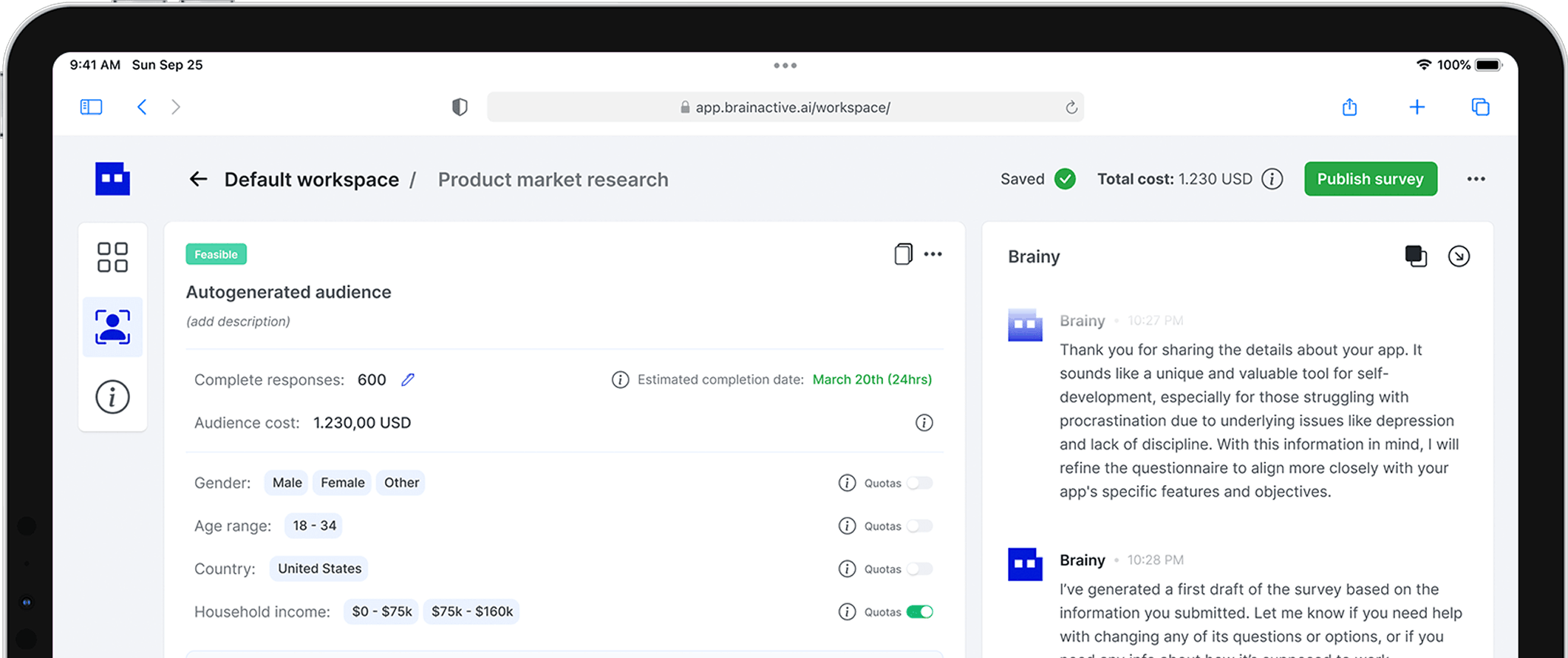
Rather than publishing static respondent counts per country - which can be misleading and quickly outdated - Brainactive provides live feasibility estimates before launch, so you can assess reach realistically for your specific criteria.
Coverage varies by country, audience type, and incidence rate.
Get started
Audience types and targeting
Respondents can be targeted using a combination of:

Demographics
(age, gender, location, education, income ranges)

Behavioral attributes
(usage, purchase behavior, category involvement)

Professional attributes
(job role, seniority, industry, company size)

Custom screening questions
Targeting is designed to balance precision with reach, helping you avoid overly narrow samples that compromise feasibility or quality.
Sampling and representativeness
Brainactive supports standard quantitative sampling approaches, including:
Quota-based sampling
Nationally representative samples (where applicable)
Custom segment sampling
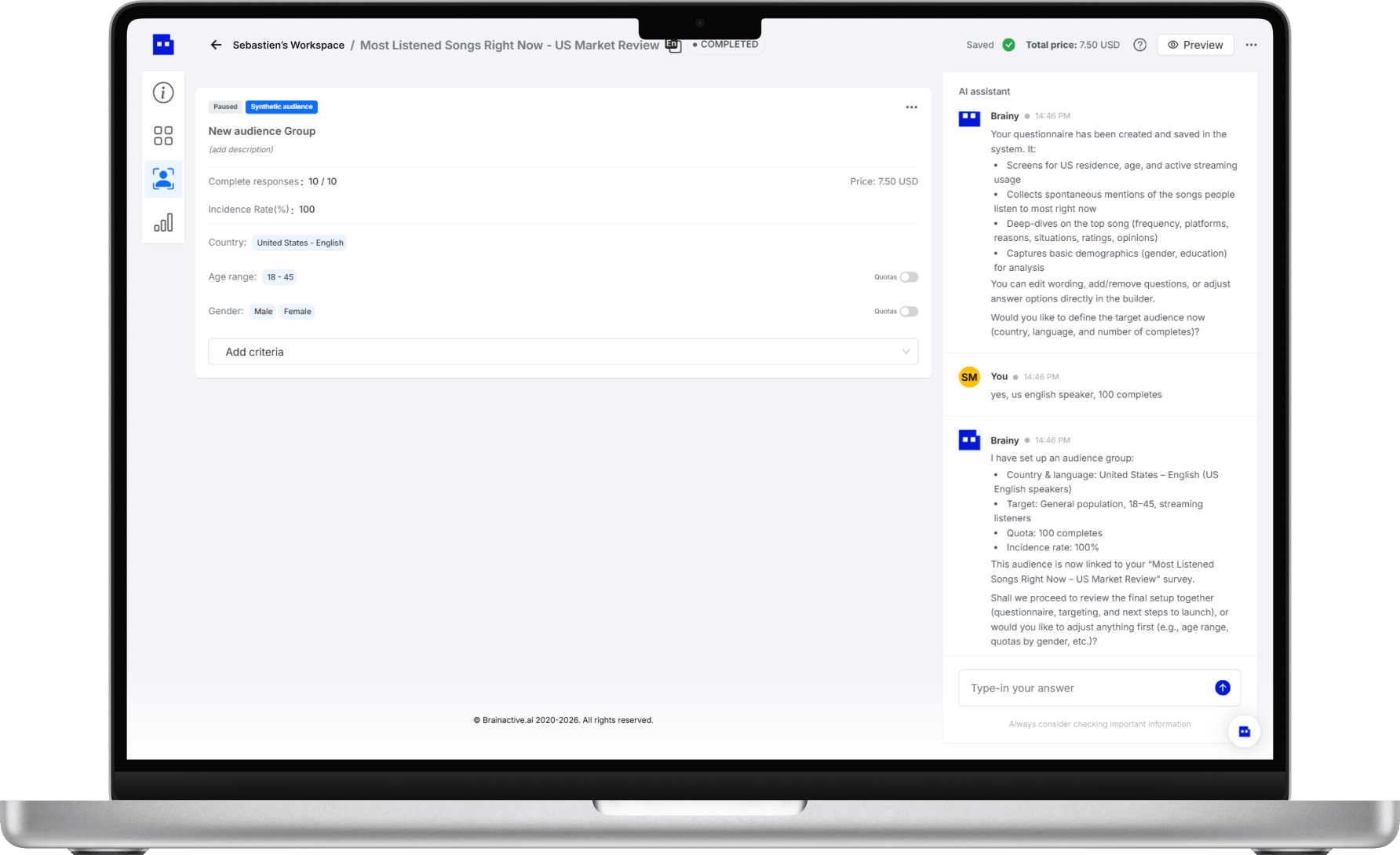
Quotas can be set and monitored in real time to maintain balance across key variables.
As with any online research, representativeness depends on:
Clear population definition
Appropriate quota design
Realistic expectations around niche audiences
Brainactive provides the tools and visibility needed to manage this responsibly.
Hard-to-reach and niche audiences
Some audiences are inherently more difficult to reach through online panels alone.
For these cases, Brainactive supports:

Advanced screening logic

Flexible quota design

Combination of multiple sources

Expert guidance when needed
Where online access is limited, we are transparent about feasibility and trade-offs, rather than forcing unreliable samples.
Sample size and feasibility
Before launching a study, Brainactive provides instant feasibility estimates based on:

Target audience definition

Geography

Sample size

Survey length
This helps you make informed decisions upfront and avoid delays or unrealistic expectations during fieldwork.
What Brainactive does not claim
To be explicit:

Brainactive does not claim perfect representativeness

It does not claim unlimited reach in every country or niche

It does not hide trade-offs between speed, cost, and depth
Instead, the platform is designed to surface these considerations clearly, so you can choose the most appropriate approach for your research goals.
In summary

Brainactive’s approach to respondents and sampling is built on:
Real human respondents
Global reach through vetted partners
Flexible sourcing options
Transparent feasibility and quotas
Responsible handling of limitations
This enables fast, scalable quantitative research - while maintaining credibility and trust.
Not sure if your target audience is feasible?


